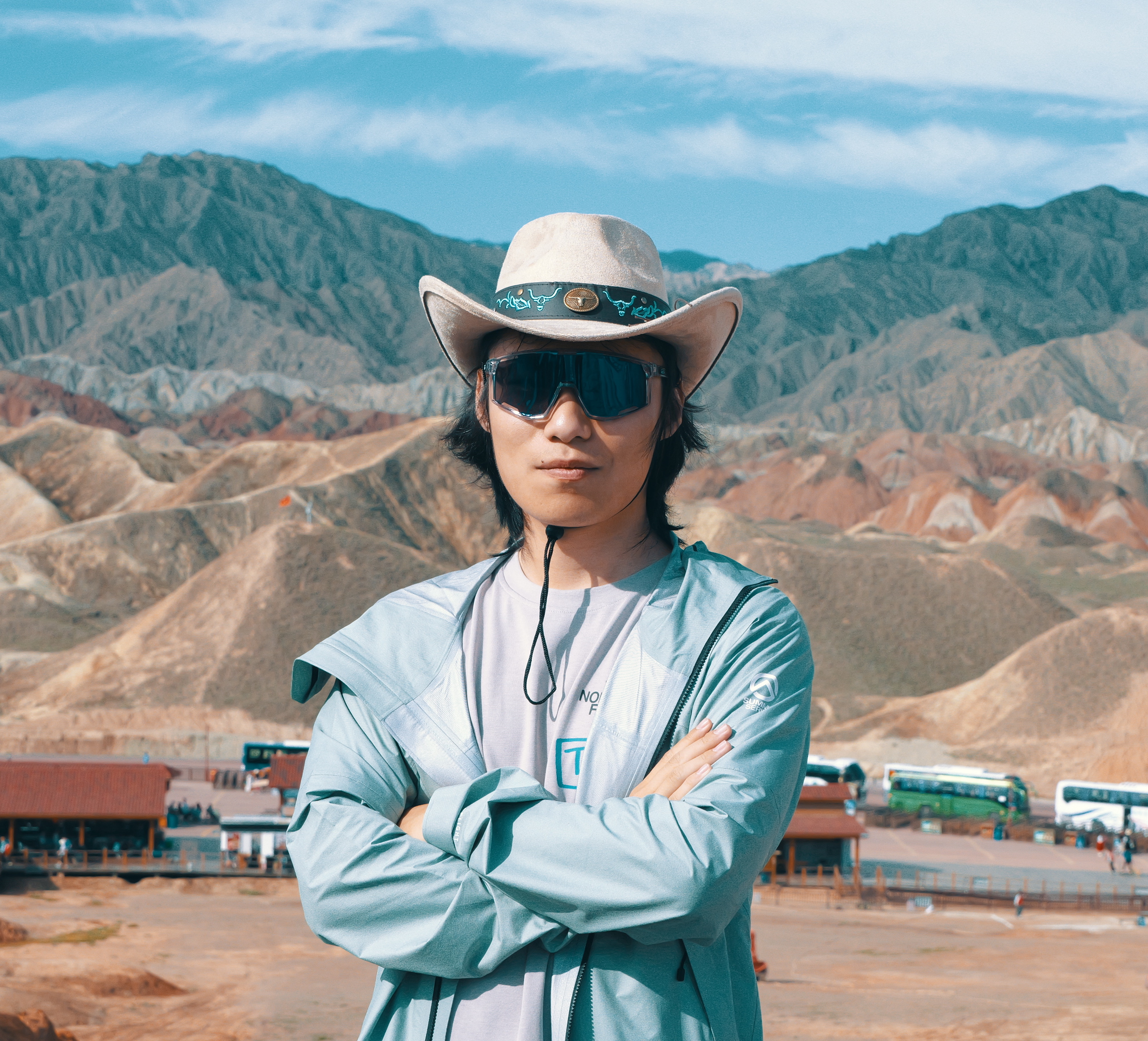
Hang Yu
About Me
I work on generalizable robot learning: how can available experience become behavior that works in a new situation? My research connects reinforcement learning, visually grounded action, continuous execution, and human data for dexterous manipulation.
I am a master’s student in Computer Science and Technology at Tongji University, advised by Prof. Junqiao Zhao. I also worked on reinforcement learning with Prof. Eduardo Veas during an Erasmus+ exchange at TU Graz.
I will join the School of Computing and Data Science, The University of Hong Kong, as a PhD student in Fall 2027, advised by Prof. Hongyang Li.
Research Direction
Learning policies that transfer to new tasks and environments.
Connecting human experience with robotic manipulation.
Coordinating hands, arms, torso, and locomotion.
For my PhD, I hope to address mobility in confined spaces, tasks requiring whole-body force, combined locomotion and manipulation in complex environments, and tasks requiring body contact.
Research Notes
Towards a Unified Dexterous Manipulation Interface Connecting high-level intent to learned contact skills through state, command and tactile futures.
Publications
-
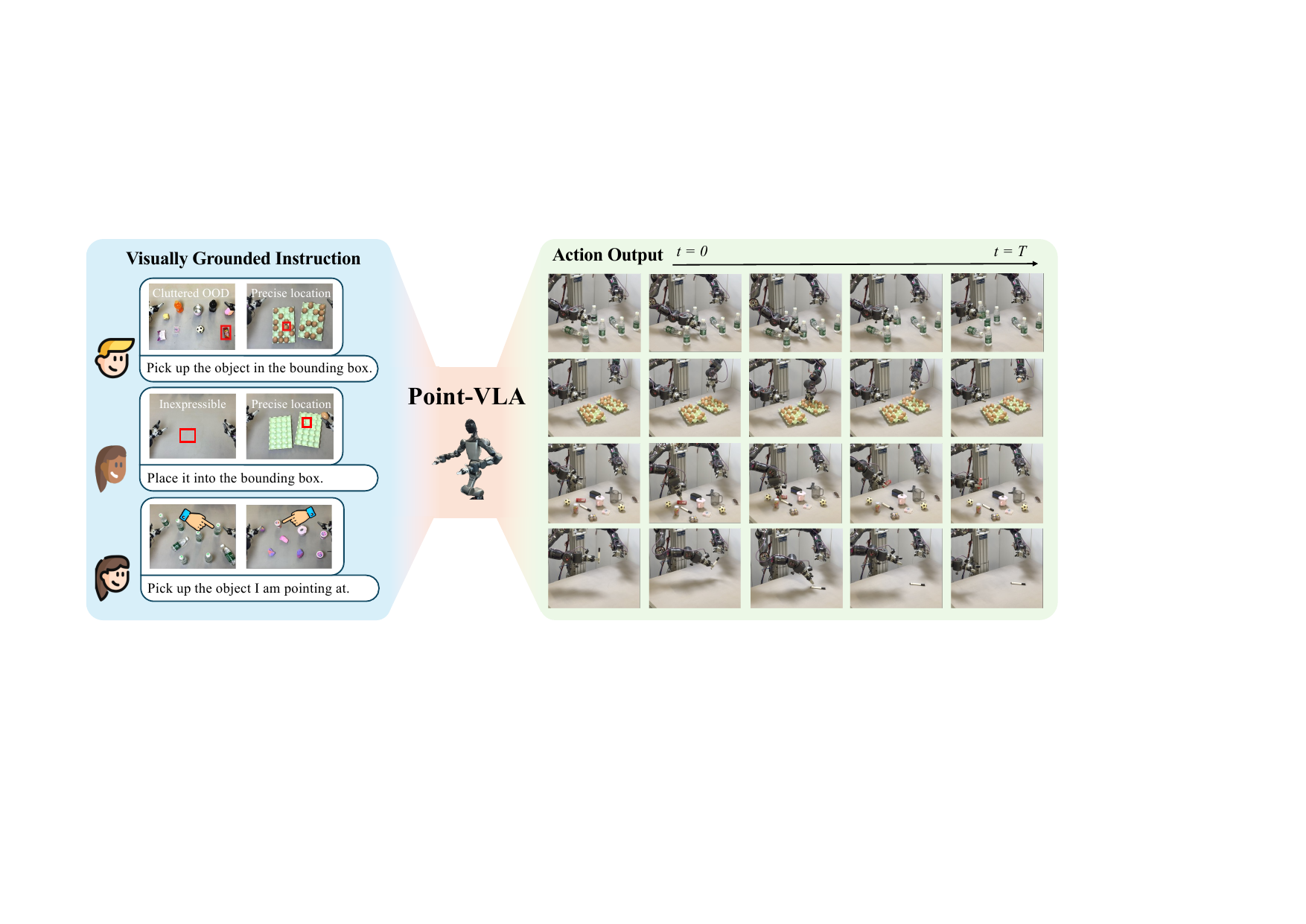 Point-VLA · First author · IROS 2026
Language alone can leave manipulation targets ambiguous. Point-VLA combines a visual target cue with a language action, using a fixed reference image, multimodal co-training, and spatial augmentation.
92.5% mean success across six reported tasks, versus 32.4% for text-only instructions and 40.0% for interleaved prompting (up to two retries within 30 seconds).
Role: Independently developed the method and carried out the experiments.
-
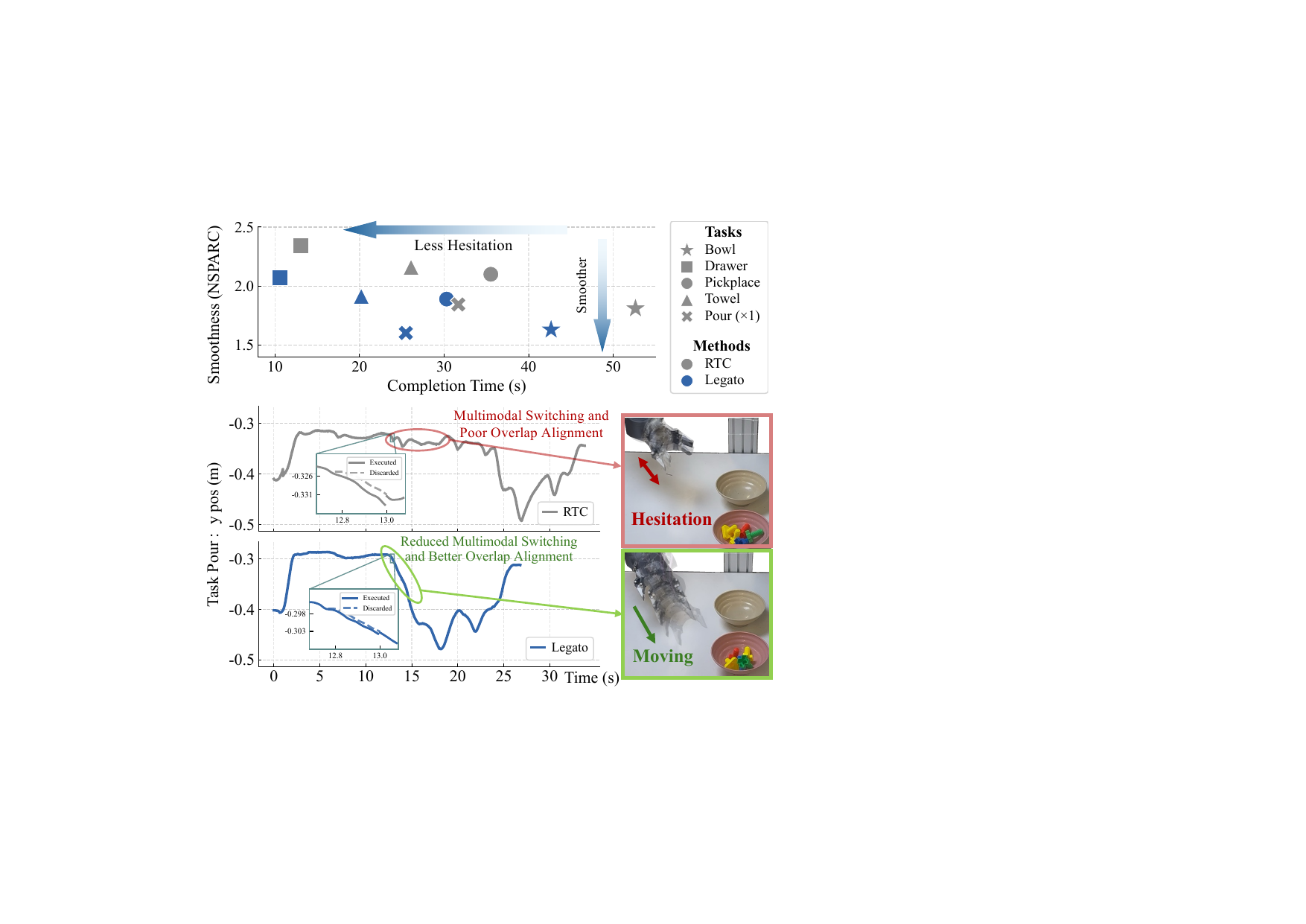 Legato · Core author · RSS 2026
Action chunks should continue smoothly without a training–inference mismatch. Legato couples scheduled initialization with a consistent velocity field to learn native continuation.
In the reported pouring comparison, completion time decreased from 95.07 to 75.73 seconds while task score increased from 9.34 to 9.72.
Role: Theory and derivations, the training–inference-consistent velocity-field formulation, and experimental implementation.
-
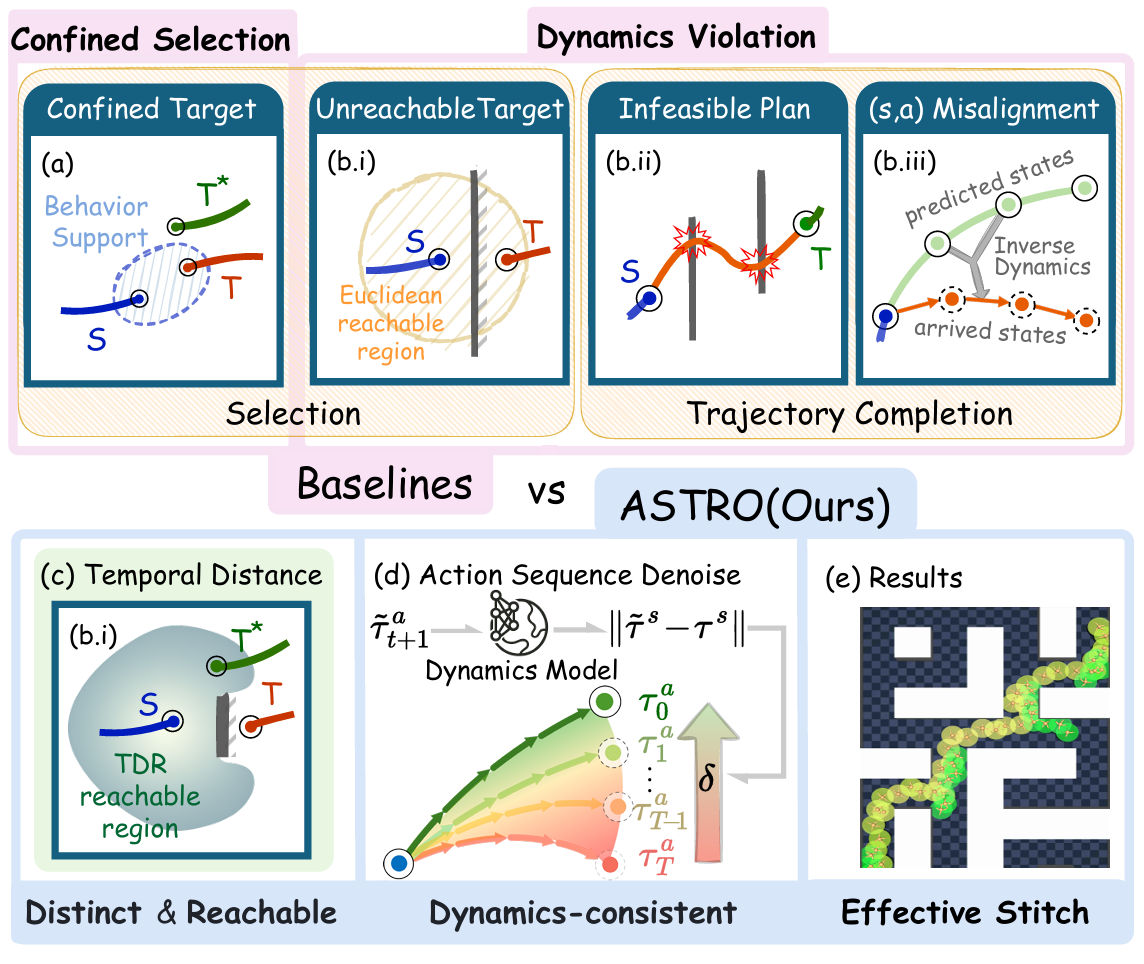 ASTRO · First author · RSS 2026 Workshop
Fragmented offline trajectories leave useful experience disconnected. ASTRO combines temporal target selection, a diffusion action planner with frozen dynamics, and deviation feedback for self-correction during training and rollout.
In the reported state-based offline RL evaluation, IQL improved from 36.08 to 45.52 and FQL from 55.52 to 65.71.
Role: Independently developed the method and carried out the experiments.
-
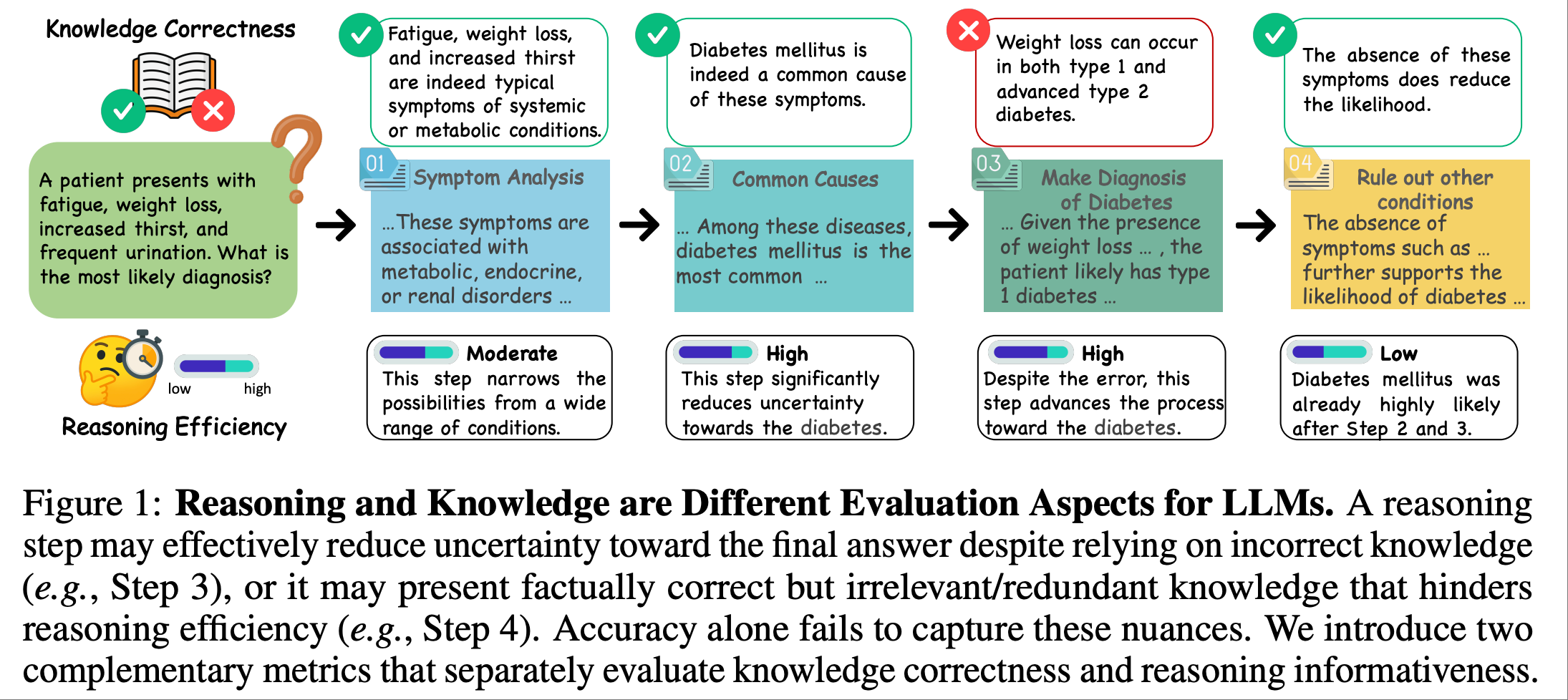 ReasoningEval · Co-first author · Preprint (2025)
What improves when an LLM reasons better? Knowledge Index and Information Gain disentangle knowledge from reasoning, revealing different effects of supervised fine-tuning and reinforcement learning in the evaluated models.
-
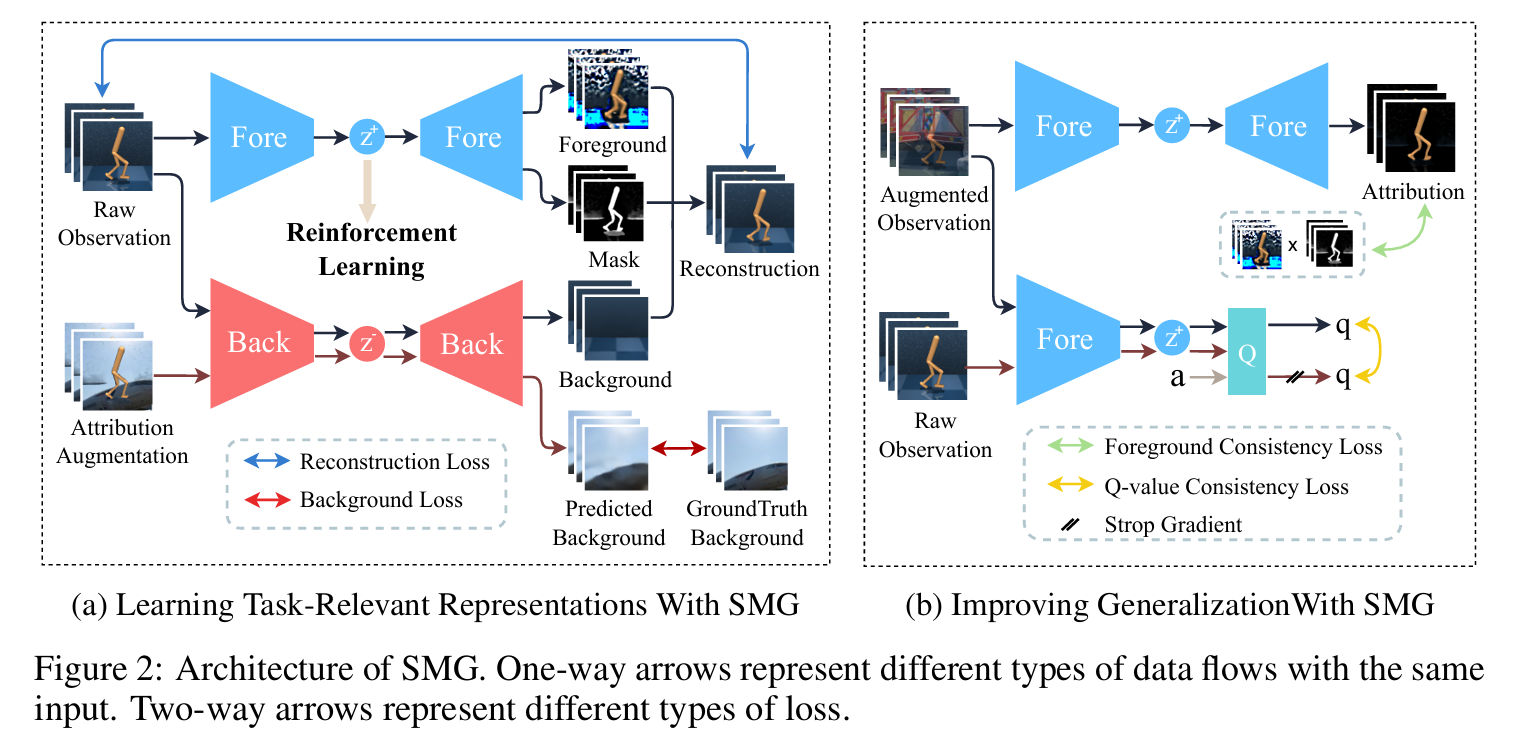 SMG · Co-author · NeurIPS 2024
Visual RL can overfit to irrelevant backgrounds. SMG separates task-relevant foreground learning using reward and inverse-dynamics signals, improving generalization under visual distractions.
-
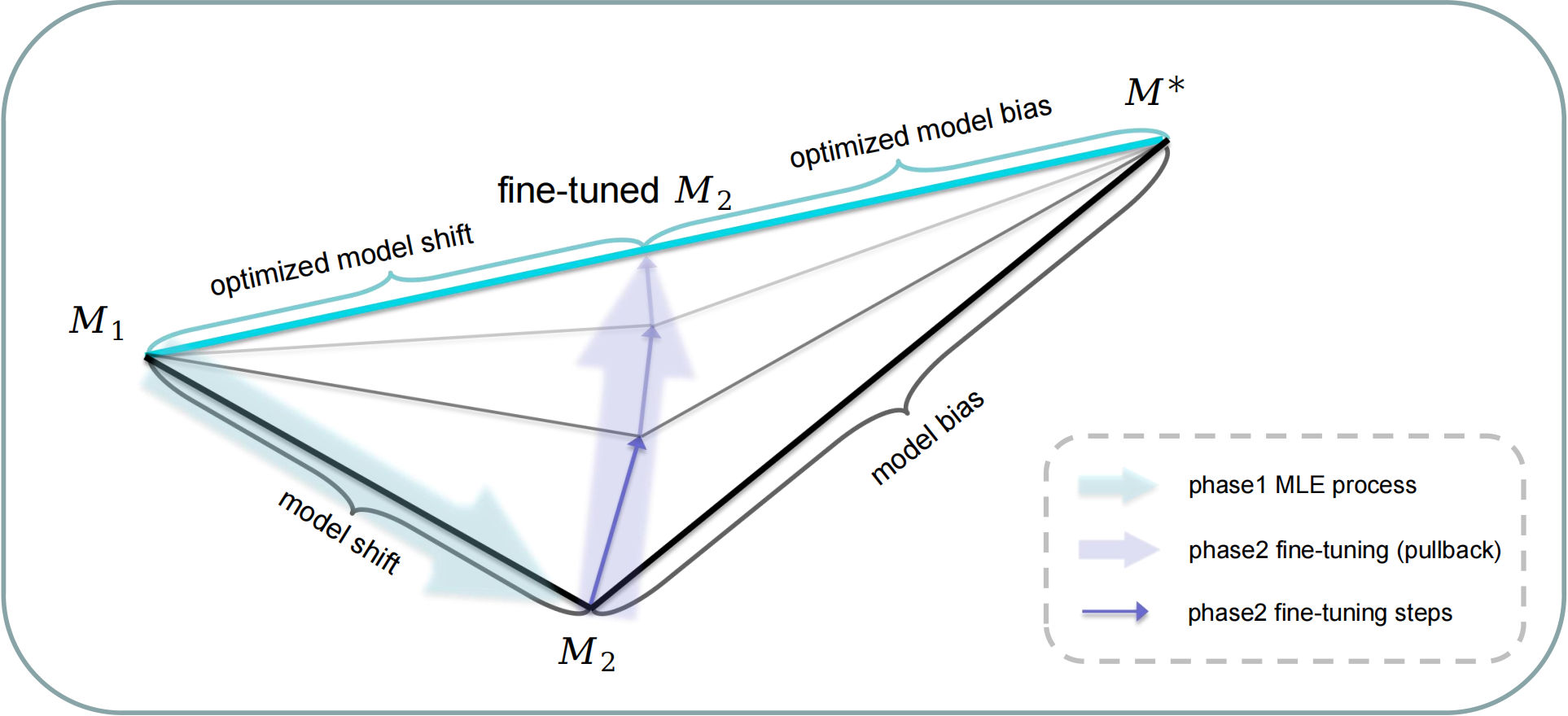 USB-PO · Core author · NeurIPS 2023
Better predictive models do not always produce better policies. USB-PO jointly accounts for model shift and model bias with an adaptive model-update objective, improving sample efficiency on six MuJoCo tasks.
Research Experience
TU Graz · Erasmus+ Exchange Researcher
Mar. – Jul. 2025 · Graz, Austria
Worked with Prof. Eduardo Veas on reinforcement learning and dynamics-guided trajectory stitching, connecting fragmented offline experience into useful training trajectories.
Education
- Tongji University — Master’s Degree in Computer Science and Technology
Sep. 2024 – Present · Advised by Prof. Junqiao Zhao. - Tongji University — Bachelor’s Degree in Computer Science and Technology
Sep. 2020 – Jul. 2024 · 1/113 in Tongji’s overall cohort assessment, combining GPA, research, competitions, and social activities; not a GPA-only ranking.
Leadership & Honors
Class monitor and team captain for the National Undergraduate Intelligent Vehicle Competition, with experience coordinating teammates and communicating technical work.
- First Prize, National Finals of the 17th Undergraduate Intelligent Vehicle Competition.
- Outstanding Graduate of Shanghai, 2024.
- First Prize, Tongji University Excellent Student Scholarship, 2020–2023.
Services
Invited Session Chair and Co-Chair, IROS 2026.
Conference Reviewers
AAAI Conference on Artificial Intelligence (AAAI) — 3 papers International Conference on Machine Learning (ICML) — 6 papers Annual Conference on Neural Information Processing Systems (NeurIPS) — 4 papers